
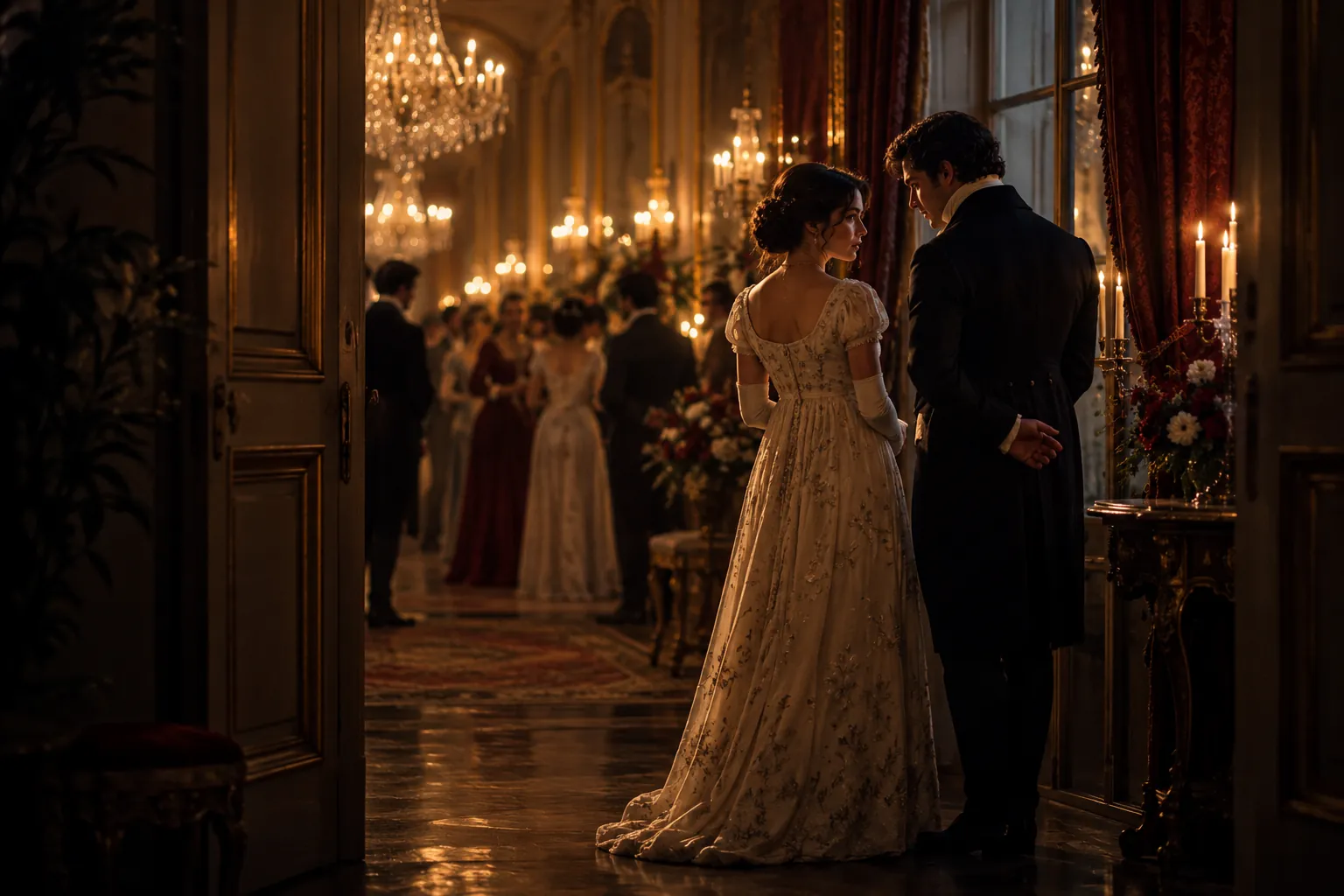
Regency and Victorian drawing rooms
Polished British voices such as Felix (contemporary RP) or Nathaniel suit dukes, governesses and the vicar who comes to tea. Contrast them with warmer voices below stairs.
Historical fiction
Make a historical fiction audiobook where a Regency duke, a Lancashire mill girl and a 1940s radio announcer each sound like they belong in their century. Cast period-appropriate voices and accents for every character, keep a steady narrator at the center, and export chapters that play in compatible audiobook apps.
EPUB, PDF, DOCX, TXT or MD · up to 30 MB
Read in your browser. Nothing is uploaded until you generate
The voice library includes British, Northern English, Australian and American frontier voices, alongside dozens of neutral narrators. Here is where each tends to fit.
Polished British voices such as Felix (contemporary RP) or Nathaniel suit dukes, governesses and the vicar who comes to tea. Contrast them with warmer voices below stairs.
Northern Terry brings a Northern English sound to weavers, miners and the landlord of the local pub, the backbone of many industrial sagas.
Wyatt, a wise rustic cowboy, and John Morgan, gritty and rugged, give Westerns their ranchers, marshals and trail bosses without a cartoon drawl.
Brock, a commanding sergeant, fits the parade ground. A vintage radio DJ voice can read the wireless bulletin your characters gather around.
No one knows how a Roman senator sounded, so listeners accept clear English. Choose gravity over accent: deep, older voices for emperors, abbots and kings.
An Australian voice suits a convict transport or a goldfields saga. Keep any rough sailor voice for the bosun, not the whole crew.
Listeners of historical fiction audiobooks forgive a modern vowel. They do not forgive a stage accent that turns a character into a joke. A few rules keep the period convincing.
Many historical novels alternate between a present-day researcher and a past heroine. Two narrators make the switch obvious by ear. This is how to build it with the tools you already have.
Save the past chapters and the present chapters as two files, keeping the chapter headings so the numbering survives.
Import each file as its own project and choose a different narrator for each. Cast shared characters with the same voices in both.
Generate both projects and download one MP3 per chapter, so every chapter is a separate file with its own name.
Drop all the files into the free MP3 to M4B converter, drag them into the book’s order, name the chapters and export one M4B.
The nonfiction tab is a good starting point for a period cast: a deep, warm narrator, an Australian voice and a Northern English one. Switch to the thriller tab to hear a sergeant who would suit a war novel.


Clear, warm narration for memoir, history and how-to books, with guest voices for quotes.
Premium voicesTap a role to hear its voice.
Nonfiction audiobook narration guideReading a letter as its author. In a historical fiction audiobook, epistolary chapters, wartime letters and diary entries are read by the narrator by default. When a letter should sound like the person who wrote it, open the chapter, select the letter’s lines and pick that character from the speaker menu on each line. A [reading her own words, tired] direction adds the feeling of a voice on paper.
Names that are not said as spelled. English history is full of traps: Pepys is “Peeps”, Beauchamp is “Beecham”, Worcester is “Wooster”. Preview the first scene where each name appears. If a voice gets it wrong, respell it in that line and regenerate just the line; the audiobook pronunciation guide shows respellings voices follow.
Kings, queens and generals. Cast a queen or a general for age, rank and temperament, not for an impression of a famous recording. If Napoleon speaks English in your text, he does not need a French accent; pick one rule for every foreign character and keep it.
Latin, French and old forms. Short phrases in another language usually read well. For a long passage, check one line first, and keep italics out of the file, since voices read the words, not the styling.
A historical audiobook tends to run long. Estimates assume a natural pace of about 155 words per minute and Standard voices at roughly $9 to $12 per finished hour.
| Subgenre | Typical length | Finished hours | Standard voices |
|---|---|---|---|
| Western | 60,000 to 80,000 words | 6.5 to 8.5 | $60 to $105 |
| Regency or Victorian | 70,000 to 90,000 words | 7.5 to 9.5 | $70 to $115 |
| Dual timeline | 90,000 to 110,000 words | 9.5 to 12 | $85 to $140 |
| War or family saga | 100,000 to 130,000 words | 10.5 to 14 | $95 to $170 |
| Epic court novel | 150,000 to 200,000 words | 16 to 21.5 | $145 to $260 |
Premium and Expressive voices cost more per hour. Run your own word count through the audiobook cost calculator to compare them with a human narrator.
Public domain classics. Ivanhoe, A Tale of Two Cities and The Three Musketeers are historical novels that are free to record in many countries. The public domain audiobooks page explains where to find clean texts and how to check their status where you live.
Historical romance. A Regency love story needs two leads with chemistry as much as it needs period polish; the romance audiobook narration page covers duet casting.
Sagas that span generations. Save the cast and reuse it for every historical fiction audiobook in the series, so the matriarch who is twenty in book one still has her voice, a little older in delivery, in book four. Directions such as [older, slower, a little frail] carry a character through the decades.
Yes, within the voices available: polished RP and other British voices, a Northern English voice, an Australian voice and two cowboy voices for Westerns, plus many neutral narrators. For historical fiction narration, the accent comes from the voice you choose; a bracketed direction can soften or sharpen delivery but will not reliably create a new accent.
Split the book into two files by timeline, import each as a project with its own narrator, and export MP3 chapters from both. Then combine them in reading order with the free MP3 to M4B converter, naming each chapter as you go.
Most names read well, but English place names and old family names often break the rules. Preview the first scene where each appears, and respell any name a voice gets wrong in that line. Regenerating one line leaves the rest of the chapter untouched.
Yes. Letters are narrated by default, but you can reassign any line to a cast member from the speaker menu on that line, then add a direction such as [reading aloud, hesitant]. It works best for characters who already speak elsewhere in the book.
It can be more authentic than one narrator, because a servant, a soldier and a duchess no longer share one voice. Keep the narrator neutral, avoid caricature accents and let the dialogue carry the period. Hear a short sample using gift credits in the AI audiobook generator before you decide.

Upload your novel and hear your historical fiction audiobook cast with period voices, free for a short sample.