
The protagonist
Often a gamer dropped into a new world, with a modern voice among swords and spells. A natural, slightly wry voice keeps the inner commentary fun.
LitRPG audiobooks
A LitRPG audiobook has a problem no other genre has: stat screens, level-up notices and loot lists that look great in print and can bury a listener in numbers. Decide what the System says out loud, give it a voice of its own, cast the party and the bosses, and keep the same voices for every volume.
EPUB, PDF, DOCX, TXT or MD · up to 30 MB
Read in your browser. Nothing is uploaded until you generate
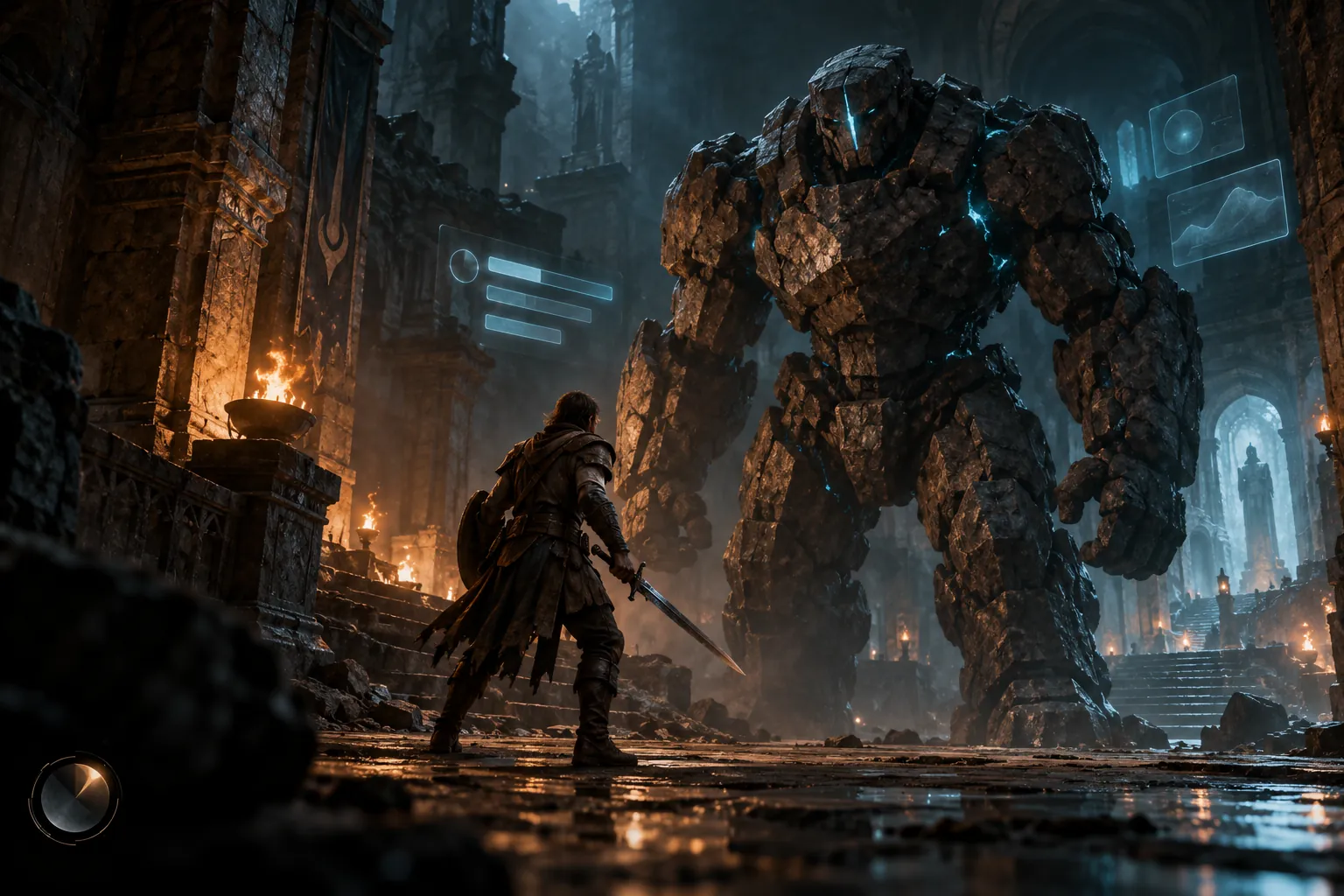
Readers skim a stat block; listeners cannot. Authors who turn a book into a LitRPG audiobook usually decide case by case. These are common approaches, not rules.
| System text | Common approach | Why |
|---|---|---|
| Level-up notice | Read in full | Short, satisfying and part of the rhythm of the genre |
| Full character sheet | Read the first time, then only the changes | Twenty stats every chapter tire the ear |
| New skill description | Read in full | It explains what the hero can now do |
| Loot and inventory | Summarize and keep the item that matters | Listeners remember one sword, not twelve potions |
| Quest prompts | Read in full | They set up the plot of the next chapters |
| Combat damage numbers | Cut most of them | Numbers in a fight slow the action down |
Make these edits in a separate audio copy of the manuscript, so the ebook keeps every number and the LitRPG audiobook stays easy to follow.
[say with hyped, high energy like a YouTube intro]
Stop scrolling. In the next sixty seconds, I'm going to show you the trick that doubled my channel.
In LitRPG audiobook narration, listeners need to know instantly when the System is speaking, and the cleanest way is to make it a role. Put each system message in double quotation marks and tag the first one like dialogue, for example “Level up,” said the System. The System is then detected as a speaker, and you can give it a crisp, even voice nobody else in the cast uses.
If the detection misses a later message, open that line’s speaker menu and move it to the System role. A direction such as [crisp and neutral, like an interface] at the start of the line keeps the delivery steady on every model except Premium, which ignores bracket notes.
One catch: many LitRPG books wrap system messages in square brackets. Bracketed text is treated as a direction or tag, not as words to read, so swap those brackets for quotation marks or plain text in your audio copy before you upload.
The LitRPG line-up pairs Hank, a deep and engaging narrator for stat screens and boss fights, with Callum as a husky trickster rogue and Wyatt as a wise, rustic old guide. Tap a role to hear it, then pick a System voice of your own in the studio.



A steady narrator for stat screens and boss fights, a trickster rogue and a wise old guide.
Premium voicesTap a role to hear its voice.
LitRPG audiobooks are only as clear as the text behind them. Five passes turn a manuscript built for the page into one built for the ear.
Leave the ebook untouched and make an audio copy. All of the trimming and formatting below happens there.
Replace the brackets, borders and tables around system messages with plain text in quotation marks. Tables and drawn boxes read badly line by line.
Turn “+15 STR” into “plus fifteen strength” and “Lv. 42” into “level forty two”. Abbreviated stats are what a voice misreads most often.
Follow the table above: keep level-ups and new skills, trim repeated character sheets and summarize the loot.
Make each book or serial arc its own project. Text files start a new chapter at lines like “Chapter 12”; Word files split on Heading 1 and Heading 2.
Not every game-flavoured book shows a stat sheet. A gamelit audiobook with light game elements may need only a System voice, while progression fantasy with no screens at all is close to ordinary fantasy. Use as much of this page as your book needs: the casting advice holds for all of them, the stat policy only where numbers appear.
The studio casts a narrator, up to ten named characters and an “Other voices” role per book. Over a long run of LitRPG audiobooks, spend those ten slots carefully.
Often a gamer dropped into a new world, with a modern voice among swords and spells. A natural, slightly wry voice keeps the inner commentary fun.
Crisp, even and impersonal. If your System has a personality, sarcastic or helpful, let a direction carry it rather than a cartoon voice.
The tank, the healer, the rogue. Match each voice to the class, and make sure the two who banter most sound least alike.
A boss gets one big scene. Pick a voice no ally uses and save [booming, slow] for the moment it reveals itself.
Shopkeepers, quest givers and guild clerks can share “Other voices” unless they recur across volumes.
Most growl rather than talk. Describe the sound in narration and keep named roles for monsters that actually speak.
Volumes run long. LitRPG audiobooks start from long manuscripts: volumes often pass 120,000 words, about 13 hours of audio at 155 words per minute. That is roughly $115 to $155 with Standard voices, and about two thirds of that with Lite, which suits a first listen-through.
From serial to audiobook. If you publish chapters on a serial site, paste them in arc by arc; web novel to audiobook covers keeping the same voices from episode to episode. Cultivation stories with sects and elders have their own page: xianxia audiobook.
One cast for the series. A LitRPG audiobook series can run to ten books or more. Reuse the cast so the System, the party and that recurring rival sound identical in every volume, and add new party members as they join.
Costing it first. Put your word count into the audiobook cost calculator to compare LitRPG audiobook narration by AI voices with a hired narrator across a whole series. Importing and casting in the AI audiobook generator cost nothing.
Usually not. Read level-ups, new skills and quest prompts in full, read the full character sheet the first time it appears, then only what changed. Summarize loot and cut most damage numbers in combat. Make these edits in an audio copy so the ebook keeps every number.
In the studio, text in square brackets is a direction or sound tag that shapes how a line is read, not words to speak, and the Premium model drops it entirely. LitRPG often puts system messages in brackets, so convert them to quotation marks or plain text in your audio copy, or the message may never be read.
Something no character uses: crisp, even and slightly impersonal. Calm, precise voices work well. If your System has a personality, add a direction to its lines rather than choosing an exaggerated voice, so it stays easy to listen to across dozens of chapters.
The world is fantasy, so the fantasy audiobook narration basics apply: a steady narrator, consistent names, distinct heroes and villains. The difference is the game layer. Numbers, menus and notifications need a policy and a voice of their own, decided before chapter one.
If you wrote it and hold the audio rights, yes. Paste or upload the chapters arc by arc, keep the cast between uploads and check any exclusivity terms you agreed to with a serial site or a publisher. Store rules for AI narration also differ, so check them before you sell.
Write them out in the audio copy: “level forty two”, “plus fifteen strength”, “three hundred mana”. Abbreviations such as STR, AGI or Lv are often spelled out letter by letter or misread. Keep one style across the book so listeners learn the pattern.

Hear the short sample of your LitRPG audiobook free, with the System, the party and the boss cast. No card needed.