
A cast that survives a hiatus
Voices are saved with the project in your browser and can be reused for the next batch, so a character who returns after eighty chapters still sounds like themselves.
For serial fiction writers
Paste this week’s chapters and turn your web novel to audiobook episodes that sound like the last batch. Every speaking character keeps the AI voice you cast for them, the narrator stays the same from chapter one to chapter four hundred, and each chapter exports as its own MP3 or as part of an M4B volume.

There is no link import, so you work from the text you already have: your drafts, your editor or the chapter you just posted.
Copy one chapter or a whole batch into the paste box. Lines such as “Chapter 214: The Lower Floors” become chapter breaks, so a week of releases splits into separate tracks on its own.
Speakers are found from quoted dialogue and tags like said or asked. The narrator reads everything outside quotes, and characters with only a line or two share an “Other voices” role.
Reuse the cast from earlier volumes, so the protagonist, the rival and the guild master sound exactly as they did last month. Recast anyone new before you generate.
Generate the chapters, listen through, fix any single line, then download one MP3 per chapter for your feed or an M4B for the finished arc.
Turning web novels to audiobooks is a different job from narrating one book: serials run long, cast wide and release on a schedule.
Voices are saved with the project in your browser and can be reused for the next batch, so a character who returns after eighty chapters still sounds like themselves.
The ten characters with the most dialogue get their own voices, plus a narrator. Walk-on speakers fold into “Other voices”, which keeps a sprawling cast manageable.
Numbered headings and their titles become M4B chapter markers, so listeners can jump straight to chapter 37 instead of scrubbing through a timeline.
A misread name or a flat line can be edited and regenerated on its own. The rest of the chapter, and the credits already spent on it, stay as they were.
A note such as [shouting over the storm] at the start of a line changes how it is delivered on the Standard, Lite and Expressive models.
Lite voices cost 6 credits per 1,000 characters, so you can proof-listen a backlog cheaply and save Standard or Premium voices for the public release.
Many long-running serials are progression fantasy or LitRPG. Hear the narrator and party voices a web novel audiobook in this genre tends to get, then swap any of them.
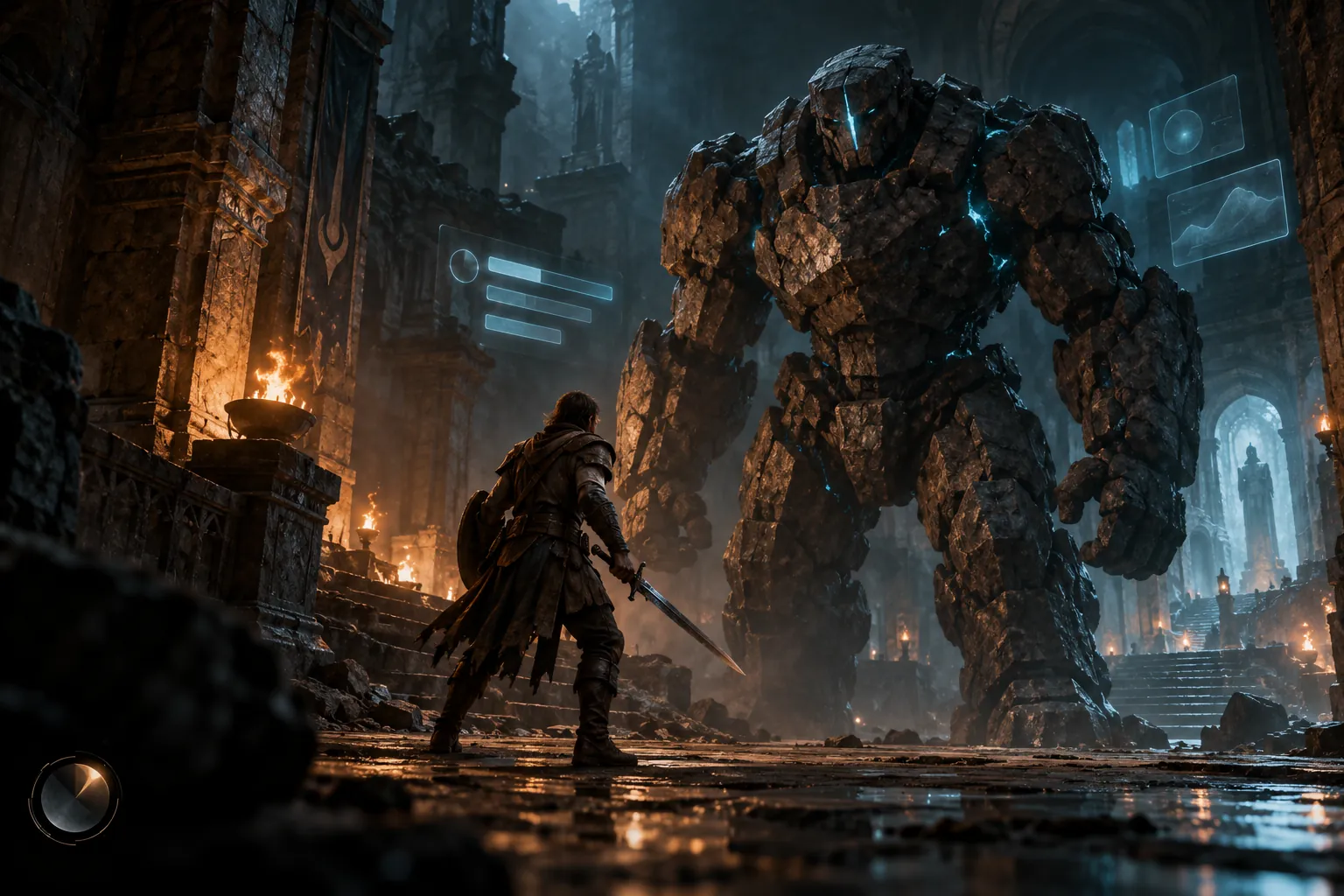



A steady narrator for stat screens and boss fights, a trickster rogue and a wise old guide.
Premium voicesTap a role to hear its voice.
LitRPG audiobook narration guideWeb novel text to speech estimates at 155 words per minute and about 5.7 characters per word, with Standard voices at 9 credits per 1,000 characters.
| Batch | Typical words | Finished audio | Standard credits |
|---|---|---|---|
| One chapter | 2,500 to 3,500 | 16 to 23 minutes | About 130 to 180 |
| A week of daily chapters | 17,500 to 24,500 | 1.9 to 2.6 hours | About 900 to 1,260 |
| A 40 chapter arc | 100,000 to 140,000 | 10.8 to 15 hours | About 5,100 to 7,200 |
Run your own numbers in the audiobook length calculator or the audiobook cost calculator, then compare monthly credits on the pricing page.

 Same cast in every book
Pasted text is split wherever a line reads like a heading: “Chapter 12”, “Chapter Twelve: The Trial”, “Part 3”, a prologue or an epilogue, or a Markdown heading such as “## 12. The Lower Floors”. If your house style is “Ch. 12”, change it to “Chapter 12” before you paste so each release lands in its own track.
Text with no headings at all is cut into parts of roughly 4,000 words, which works for a quick listen but is less useful for your audience. Delete author’s notes, sponsor plugs and “next chapter” links first, because whatever stays in the paste box gets read aloud.
A few minutes of cleanup saves credits and retakes, which adds up over a long serial.
Release audio after the text, or as a perk. Some serial writers post audio a few days after each chapter, some keep it for supporters on a membership platform, and some release audio only for finished arcs. Pick a rhythm you can sustain, and check each platform’s current rules on audio uploads and AI narration before you post.
Keep the voices stable, even when the story is not. Your readers already hear the characters in their heads, so a voice change at chapter 150 is jarring. Save the cast once the main roles settle, reuse it for every batch, and recast a role only when the character truly changes, such as after a time skip.
Budget by the arc, not the chapter. A daily serial of 3,000 word chapters adds roughly two and a half hours to the web novel audiobook every week. With Standard voices that is about $9 to $12 per finished hour. Importing, chapter detection and casting are free, and a Google sign-up comes with 100 gift credits (valid for 7 days, about 12 minutes on Standard; usage varies by text and voice tier) for a short sample with no card.
Translated serials need two permissions. Many popular web novels are translations, and making audio of one needs permission from the rights holder of the original and usually of the translation too. If you write your own story in a familiar genre, the xianxia audiobook and LitRPG audiobook pages cover genre casting in more depth.
From serial to edition. When an arc is complete, export an M4B with named chapter markers and the title. That file works as a reader reward, a store sample or the base of a manuscript to audiobook edition once the book is revised. To start from a plain file instead, the AI audiobook generator takes TXT, DOCX, Markdown and EPUB.
Not yet. There is no URL import, so copy the chapter text from your own drafts or editor and paste it in, or upload a TXT, DOCX, Markdown or EPUB file. Pasting also gives you a chance to strip author’s notes and comments before anything is read aloud.
Yes, if you reuse the cast. Voices are stored with your project in the browser, and the same cast can be applied to the next batch or volume, so the narrator and every main character sound identical from the first release to the latest one.
Each project voices up to ten named characters, chosen by how much dialogue they have, plus the narrator. Everyone else shares an “Other voices” role. Working one arc at a time keeps the ten slots for the characters who carry that part of the story.
A 3,000 word chapter is roughly 17,000 characters. That is about 155 credits with Standard voices, about 100 with Lite and about 220 with Premium. Importing, chapter detection and casting cost nothing, so you only pay for the audio you generate.
Square brackets mark directions and sound tags, and some voice models drop bracketed text, so a status box like [Level 12 reached] may go silent or be treated as a cue. Swap those brackets for another mark, or write the line as “System: Level 12 reached”, and it is read aloud.
If the story is yours, you own the audio you generate from it and decide where it goes. Each platform sets its own rules on audio uploads and AI disclosure, so check their current policies at the time you post. For a translated novel, get permission from the rights holders first.

Paste your latest chapters and hear your web novel to audiobook with a short sample using gift credits, no card needed.