
A shared memory
Players forget names between sessions. A D&D recap of the story so far, in order, puts everyone back in the same place before the first decision.
For game masters
Turn your notes from last week into a DnD session recap with a narrator for the story so far and a separate voice for each NPC who speaks. Press play when everyone sits down, and the table remembers who betrayed whom before the first roll.
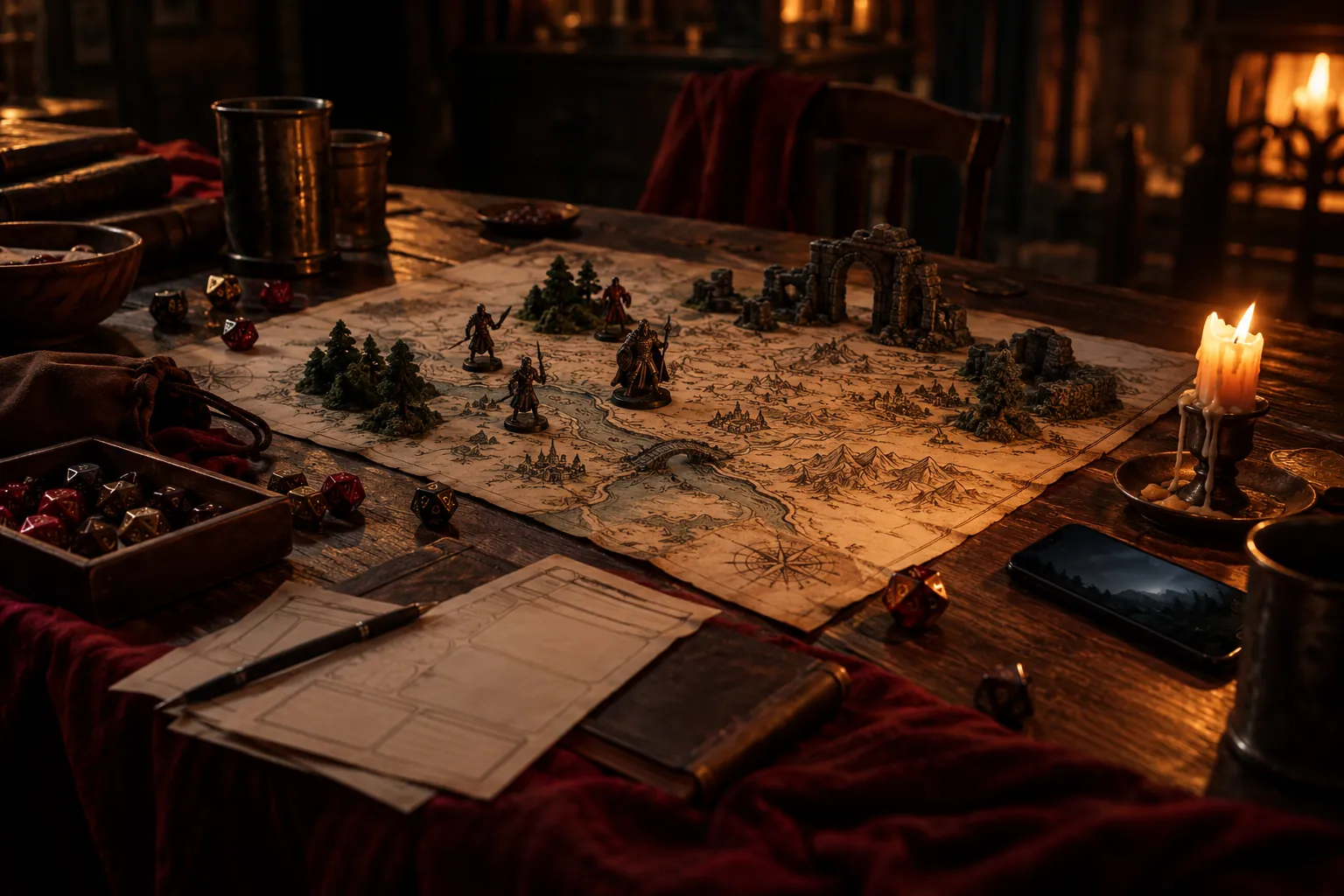
Ten minutes after the session, while the notes are fresh, is the best time to write it.
Summarize the session in past tense, as a narrator would. Two to four minutes of audio is about 300 to 600 words, long enough to remind and short enough to keep the table’s attention.
Put what NPCs said in quotation marks with a tag: “Your debts are paid,” said Captain Vos. Lines in script form, with the name in capitals and a colon in front, are cast too. An NPC needs at least two lines to get a role of their own.
The narrator reads everything outside quotes. Give the villain something cold, the innkeeper something warm, and swap any voice until it matches what you do at the table.
Download the MP3 and play it as players settle in, or post it in your group chat for anyone who missed the session.
Five beats, in this order, turn almost any session into a D&D session recap.
| Beat | What to write | Length |
|---|---|---|
| Cold open | One quoted line from the villain or a key NPC | 1 or 2 sentences |
| Last time | The narrator summarizes what happened, in past tense | 150 to 250 words |
| Spotlights | One moment for each player character, so every player hears their name | A sentence each |
| Callback | A quoted NPC line that matters again this week | 1 or 2 lines |
| Stakes | Where the party stands, what is at risk, and the cliffhanger | 50 to 100 words |
Want to check the running time? Paste the recap into the words to minutes calculator before you generate it.
Listen to an epic narrator and a few fantasy character voices, then match them to the NPCs in your DnD recap.




A narrator built for long quests, a raider who sounds the part and a sorceress with secrets.
Premium voicesTap a role to hear its voice.
Fantasy audiobook narration guidePlayers forget names between sessions. A D&D recap of the story so far, in order, puts everyone back in the same place before the first decision.
Name one moment for every character. Players listen harder when they know their own scene is coming.
Reuse last week’s cast, so the scheming duke in session thirty sounds just as he did in session three.
A minute of narration shifts the room from catching up to playing, which saves the GM from doing it by voice every time.
Drop the file in your group chat. Whoever missed the session hears what happened instead of reading a wall of notes.
Each week’s file joins the last. At the end of an arc, the recaps play back like the trailer of the story you told together.
[say with hyped, high energy like a YouTube intro]
Stop scrolling. In the next sixty seconds, I'm going to show you the trick that doubled my channel.
Start a line with a bracketed note to change the performance. Give the lich [slow, amused, utterly certain], the goblin informant [fast and nervous], and the dying knight [barely above a whisper]. The Standard, Lite and Expressive models perform these notes; Premium reads the line plainly.
Inline sound tags such as [laugh] and [sigh] add a beat inside a line: a villain’s laugh before the threat lands, a sigh from the tired captain. For the big monologue, the Expressive model gives the widest emotional range at 34 credits per 1,000 characters, still pennies for a short recap.
A recap that sounds good aloud is written a little differently from the notes you keep.
Keep the cast for the whole arc. Voices are saved with your project in the browser and can be reused session after session. When a new NPC becomes important, give them a voice and keep it; when an old one dies, the role simply stops appearing.
Playing it online. For groups on voice chat, share the MP3 in your server or play it through whatever soundboard or music setup your table already uses; check that tool’s current features for audio files. Players who join late can listen on their own.
For actual-play shows. A voiced “previously on” makes a tidy intro for an actual-play podcast or stream. Label the narration as AI, and check your platform’s disclosure rules. If you run a published adventure or setting, read the publisher’s fan content policy before you publish anything built on it.
What it costs. A 500 word recap is about 2,850 characters, so roughly 26 credits with Standard voices or about 97 with Expressive. A full year of weekly recaps on Standard fits inside one month of the Pro plan; see pricing. Pasting and casting are free, and new accounts made with Google sign-in get 100 gift credits (valid for 7 days, about 12 minutes on Standard; usage varies by text and voice tier) to start.
Beyond the recap. Some GMs voice letters, prophecies and read-aloud boxes the same way. For a fully scripted one-shot with a cast, see the AI audio drama generator; for a written campaign novel, the fantasy audiobook narration page covers longer work. Anything else starts in the AI audiobook generator.
Two to four minutes of audio works for most tables, which is about 300 to 600 words at a narrator’s pace. Shorter recaps get forgotten, longer ones eat into play time. If the session was a big one, cover the main thread and save side plots for the next recap.
A character needs at least two lines, tagged or in script form, to get a role of their own, and each project voices up to ten named characters. Add a second line for that NPC, or move their line to an existing role from the speaker menu before generating.
Yes. The export is a standard MP3, so you can upload it to your server, share it in a channel or play it through any bot, soundboard or VTT audio feature your group already uses. Check that tool’s current limits on file size and formats.
For your own homebrew content, you own the audio you generate and can publish it. For published adventures and settings, check the publisher’s current fan content policy. Either way, say the narration is AI and follow your platform’s disclosure rules.
About 26 credits for a 500 word recap with Standard voices, or about 17 with Lite. Fifty two of those come to roughly 1,350 credits, around one month of the Pro plan. Sign up with Google and you get free credits for a short sample, no card needed.

Paste your DnD session recap and hear it narrated free for a short sample, no card needed.