
License text set aside
The Project Gutenberg header and the full license at the end are dropped, so the audio holds only the book itself.
Public domain audiobook maker
Download a classic as EPUB or plain text, upload it, and make public domain audiobooks with a narrator plus a separate AI voice for Elizabeth Bennet, Sherlock Holmes or the Mad Hatter. Check the book’s status where you plan to share it; after that, the edition you generate is yours to keep, give away or sell.
EPUB, TXT files · also PDF, DOCX, MD · up to 30 MB
Read in your browser. Nothing is uploaded until you generate
Confirm the book is out of copyright in the countries where you will share it. The rules differ, as the table below shows.
Get the EPUB from Standard Ebooks or Project Gutenberg, or Gutenberg’s plain text version. Avoid scanned PDFs, which cannot be read.
Chapters come from the contents or lines such as “CHAPTER IV”. The Gutenberg header and license are set aside, and every speaking character is cast.
Listen to chapter one, fix any line, then generate the rest and download an M4B with chapter markers or one MP3 per chapter.
Public domain audiobooks start with a public domain text, and that depends on where you publish. These are the broad rules at the time of writing.
| Where you share it | General rule | In practice in 2026 |
|---|---|---|
| United States | Published 95 or more years ago | Books published in 1930 or earlier |
| UK and European Union | Author’s life plus 70 years | Authors who died in 1955 or earlier |
| Many other countries | Author’s life plus 50 to 70 years | Check the local term before you publish |
| Translations and editions | A modern translator, editor or introduction has its own copyright | Use an old translation or a public domain edition |
General information, not legal advice. Audiobook rights covers the basics in more depth.
Free ebook files carry material that should never be read aloud, so the public domain audiobook maker clears it before narration starts.
The Project Gutenberg header and the full license at the end are dropped, so the audio holds only the book itself.
Title pages, contents lists, dedications and colophons are kept out of the narration, and the story opens on chapter one.
Text files split on lines like “CHAPTER XII”, “Part Two” or “BOOK III”, so Victorian numbering becomes clean chapter markers.
Tags such as “said Holmes” or “cried the Queen” tell the studio who is talking, and each named character gets a voice of their own.
Add [dry, ironic] to an Austen aside or [hushed, frightened] to a gothic scene, and the voice performs the line that way.
Voice a whole set of stories, such as the Holmes canon, with the same narrator, Holmes and Watson in every book.
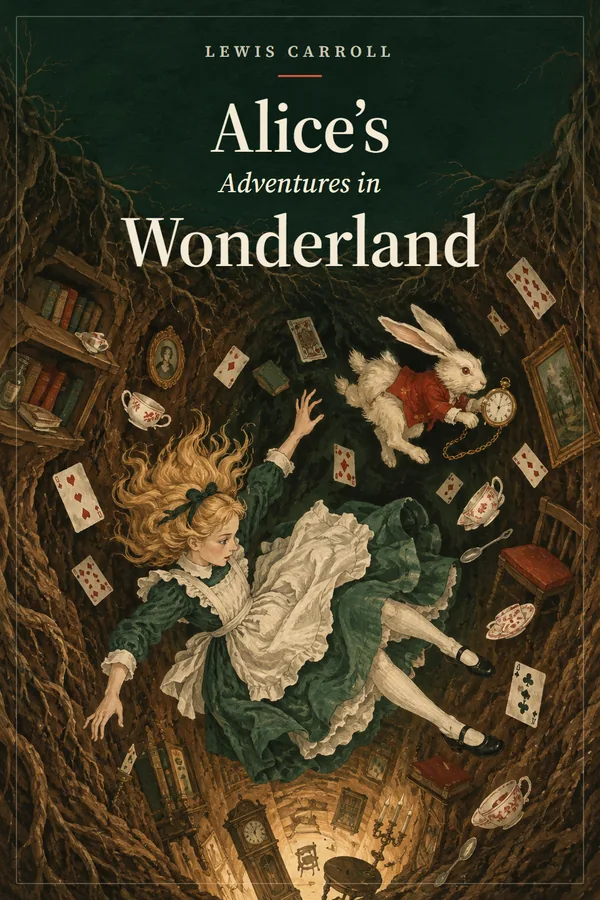
Alice’s Adventures in Wonderland is in the public domain, and this sample was made in the same studio. Every speaker has a separate AI voice.
Full-cast AI audiobook
Transcript
Playlist
Books with lots of quoted dialogue and clearly tagged speakers make the strongest public domain audiobooks.
| Book | Author | Why a cast helps |
|---|---|---|
| Pride and Prejudice | Jane Austen | Sharp drawing-room talk between the Bennets, Darcy and their neighbours |
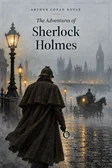
| The Adventures of Sherlock Holmes | Arthur Conan Doyle | Holmes, Watson and a new client with a story in every case |
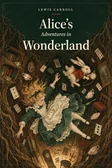
| Alice’s Adventures in Wonderland | Lewis Carroll | A parade of odd speakers, from the Hatter to the Queen of Hearts |
| The Wonderful Wizard of Oz | L. Frank Baum | Dorothy, the Scarecrow, the Tin Woodman and the Lion all talk at once |
| Little Women | Louisa May Alcott | Four sisters who need four clearly different voices |
| The Great Gatsby | F. Scott Fitzgerald | Public domain in the US since 2021, with a small, distinct cast |
Plays work too: see the Shakespeare audiobook page for scripts with speaker names.
 Same cast in every book
Old novels lean on the narrator more than modern ones, with long descriptive passages between scenes. Choose a narrator you can listen to for ten hours, often a warm, measured voice, then give the two or three main characters voices that sound clearly unlike each other.
Up to ten named characters can be cast per book, with an “Other voices” role covering the footmen, landladies and passing strangers. If an older book tags speech in an unusual way and a line lands on the wrong speaker, reassign it in the studio and regenerate just that line.
Pick a clean source. Standard Ebooks produces carefully proofread EPUB editions and dedicates its own work to the public domain. Project Gutenberg offers EPUB and plain text with its license attached; if you sell an edition made from its files, read its current terms on removing the Gutenberg name. The EPUB to audiobook converter handles both sources.
Know what makes your edition different. Volunteers at LibriVox have recorded thousands of public domain audio books and released them free, a wonderful resource for listeners. A full cast, your own introduction or a fresh translation of an older text are the kinds of things that give a new edition a reason to exist.
Check store rules. Some stores limit public domain titles that are freely available elsewhere, or ask that an edition add something new. Rules for AI narration vary too, so check each store’s current policy and read where to sell AI audiobooks before you upload.
Budget the hours. Alice’s Adventures in Wonderland runs under 30,000 words, about three finished hours, or roughly $25 to $35 with Standard voices. Pride and Prejudice, at about 122,000 words, is near 13 hours and $110 to $160. A short sample can use gift credits when you sign up with Google.
Handle old words. Archaic spellings and foreign phrases can trip an AI voice. Respell the tricky ones in the text, as the audiobook pronunciation guide shows, and regenerate only the lines that need it.
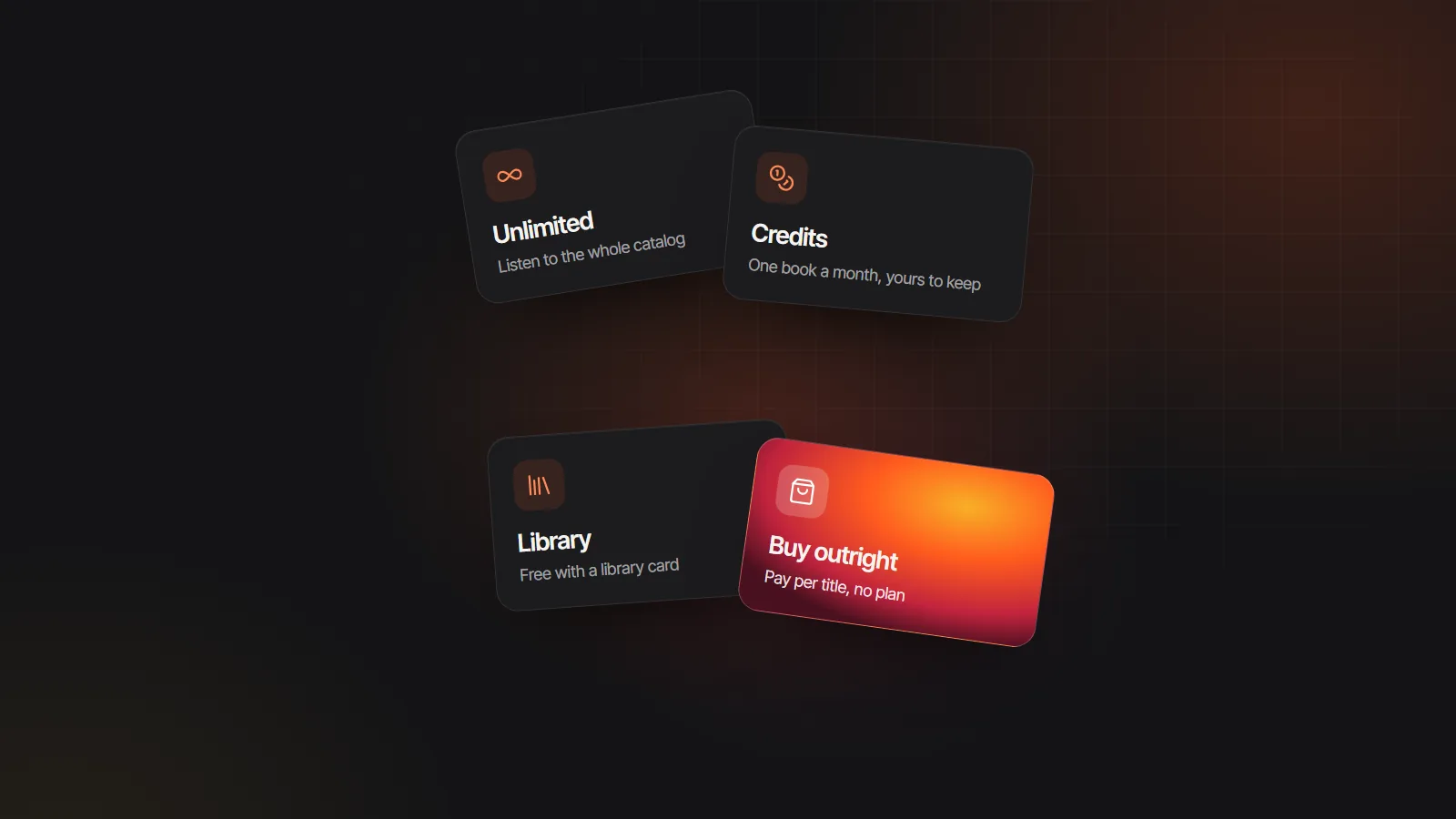 ListeningThe best Audible alternatives, by how you listenUnlimited apps, credit plans, free library loans and buying outright, compared for heavy, casual and budget listeners.Read
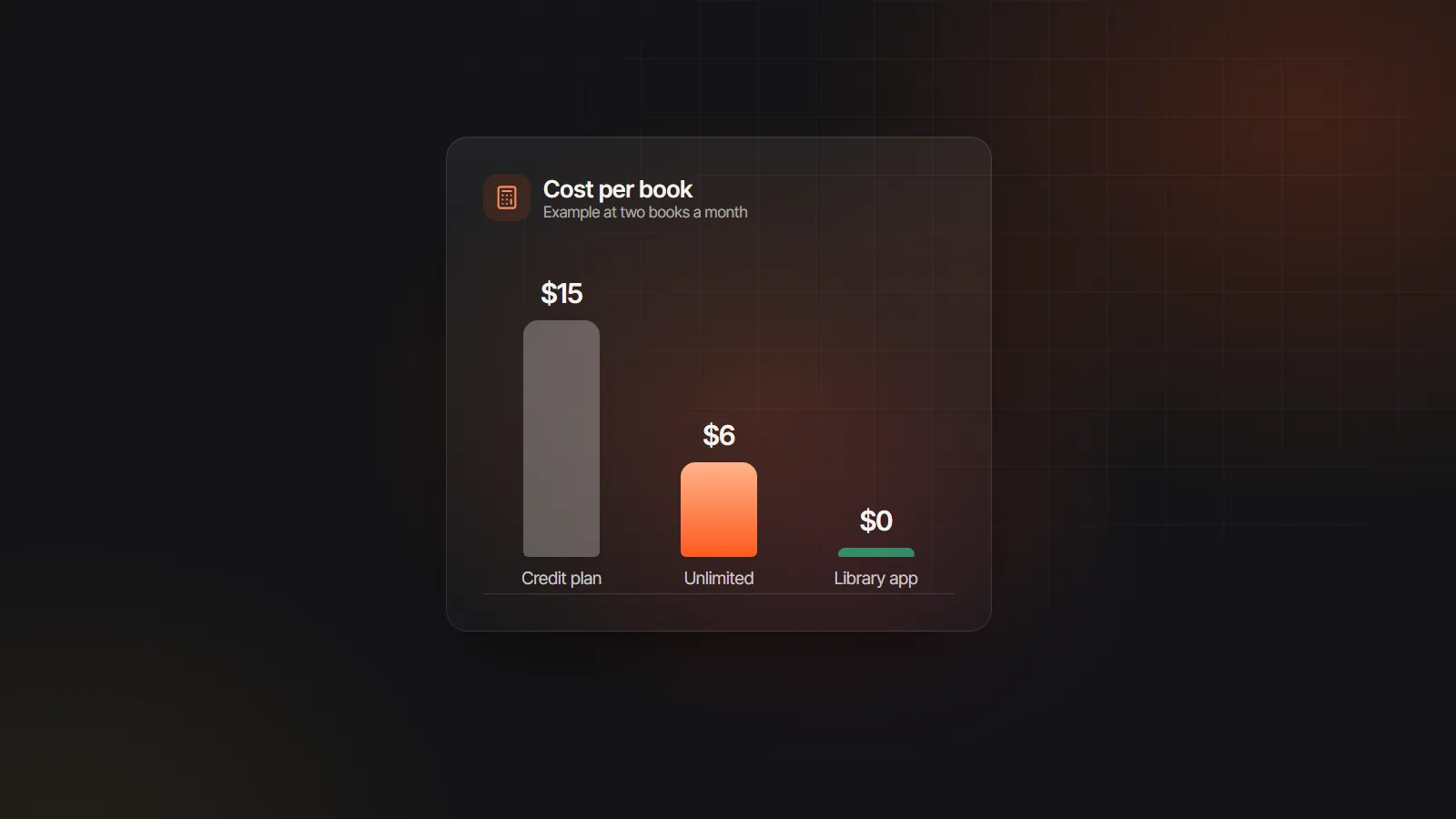 ListeningBest audiobook subscription for the way you readCredits, unlimited catalogs, listening-hour caps and library apps, with the cost per book worked out for each.Read
Yes, if the text is public domain where you sell and the store accepts the title. You own the audio you generate, so you can sell it direct, give it away or upload it to stores whose current rules allow AI narration and public domain titles.
Standard Ebooks and Project Gutenberg are the best sources, with clean EPUB and plain text files. Many other archives hold scanned page images, which cannot be read because there is no OCR. Choose a text-based file.
No. Winnie-the-Pooh, published in 1926, has been public domain in the United States since 2022, but A. A. Milne died in 1956, so in the UK it stays protected until 2027. Always check the country where you publish.
LibriVox recordings are read by volunteers, often one reader per chapter, and are free to listen to. With the AI audiobook creator you make your own edition with a consistent narrator and a separate AI voice for each character, then keep or publish the files.
No. The header and the full license at the end of a Gutenberg file are set aside along with the title page and contents, so your public domain audiobook contains only the book itself.
Only with permission. The original may be public domain, but a recent translation is the translator’s work and is usually still under copyright. Older translations that are themselves public domain are safe to use.
Upload an EPUB or plain text file, hear the cast in minutes and start your public domain audiobooks with a short sample using gift credits.