The quick pick, by books per month
Find your row first. The sections below cover the details that can change the answer.
| Books you finish a month | Want to keep them? | Pick this model | Why |
|---|---|---|---|
| Fewer than one | Either way | Buy outright, or a library app | A monthly fee costs more than the few books you buy |
| One or two | Yes | Credits | Each credit buys a book you keep, often below its list price |
| One or two | No | Library app, or listening hours on a music plan you already pay for | Nothing extra to pay |
| Three or more | No | Unlimited catalog | The price per book falls with every title you finish |
| Three or more | Some of them | Unlimited, plus the odd purchase | Stream most books, buy only the ones you will replay |
Plans and catalogs change often. Check each service’s current terms and what it offers in your country.
Work out your real cost per book
Plans are sold on the books you intend to read; your bill depends on the books you finish. Open your listening history or past library loans and count the last three months. Include books you abandoned halfway, because they still used a credit or part of an hours allowance.
Next, split that list in two: books you would relisten to or lend, and books you were glad to hear once. For most people the second pile is bigger. That pile is what an unlimited audiobook subscription is for. The first pile is what credits and purchases are for.
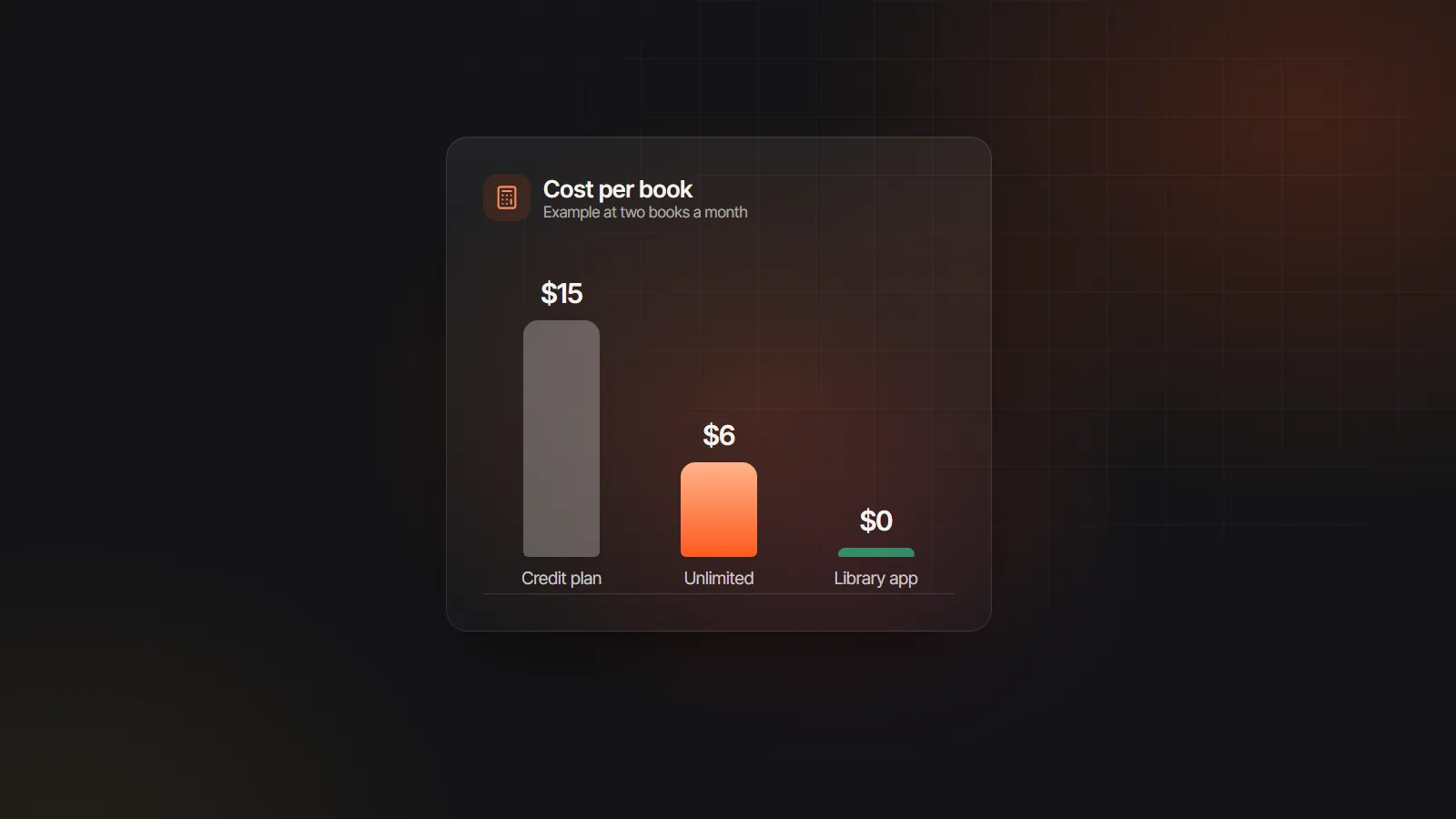
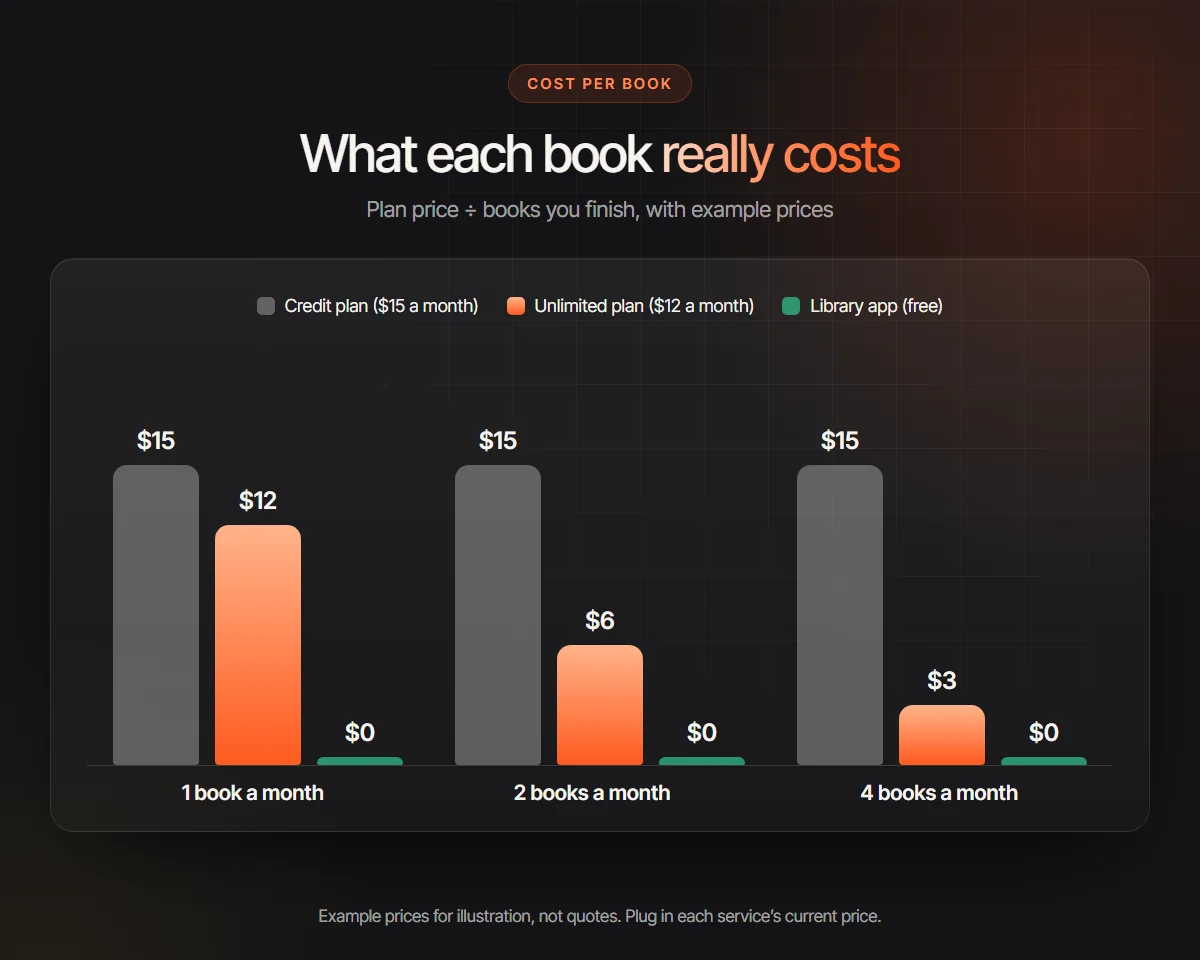
Now divide. Take the examples in the chart below, which are illustrative prices rather than quotes: a $15 credit plan costs $15 a book whether you finish one book or four, because each credit buys exactly one title. A $12 unlimited plan costs $12 for one book, $6 for two and $3 for four. A library app costs nothing at any volume.
The crossover comes early. From the second book a month, unlimited usually wins on price alone. Credits earn their price in other ways: you keep the book, new releases are included, and the value holds every time you replay it. Plug in the current prices of the services you are weighing; the shape of the chart stays the same.
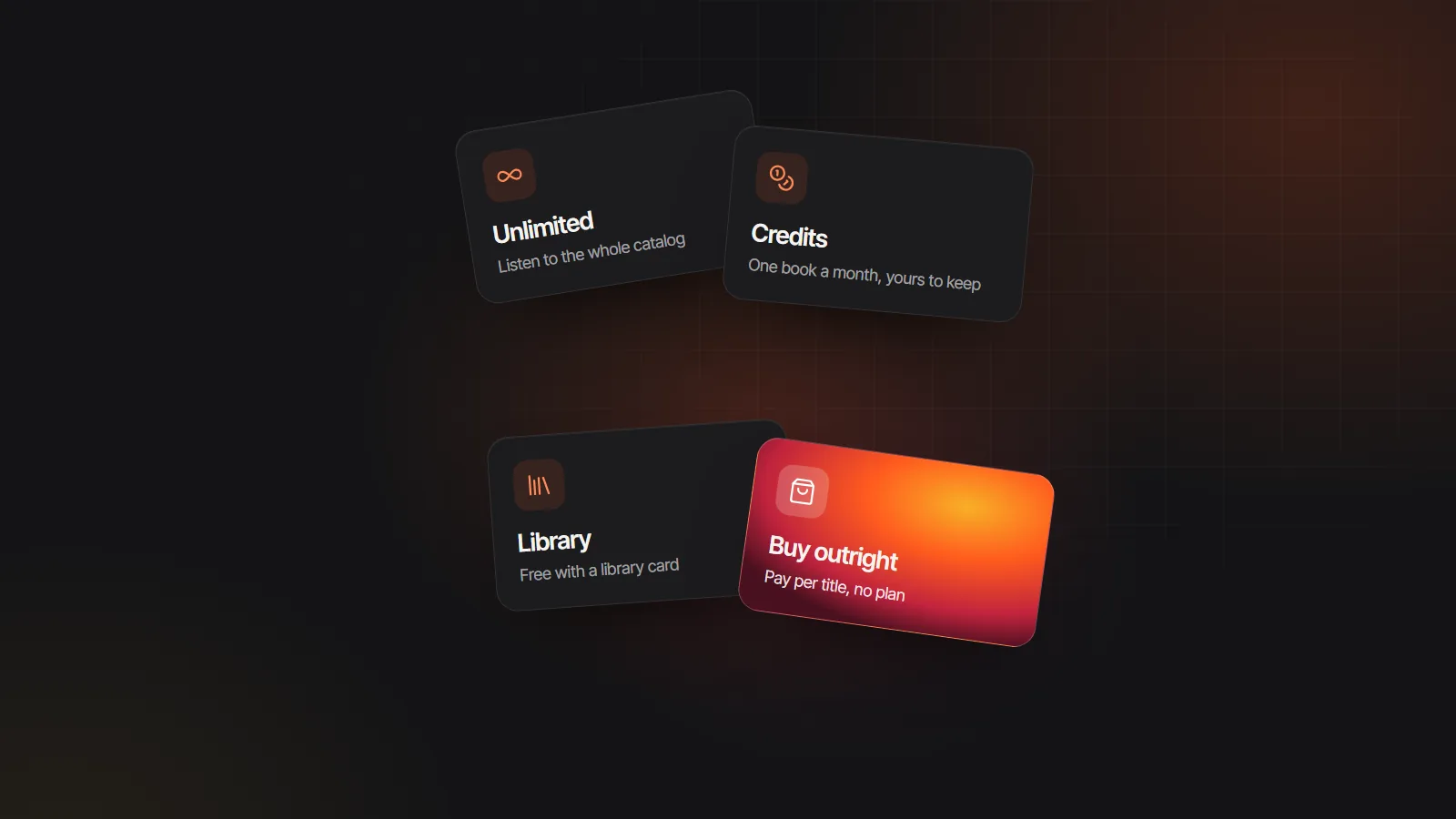
Keep, stream or borrow: what each model includes
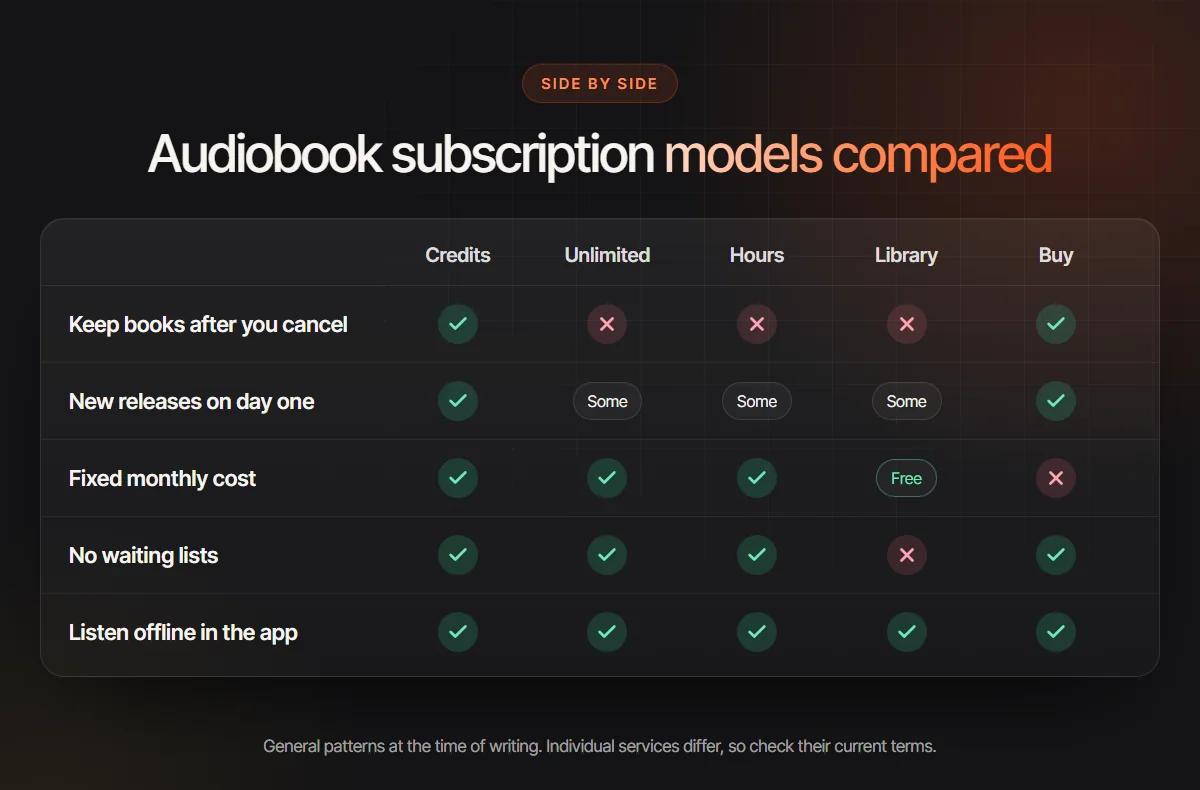
Price is half the decision, and even the best audiobook subscriptions differ more in the other half: what you are left with. The matrix below shows the general pattern. Only two models let you keep books after you cancel: credits and buying outright. Titles from an unlimited catalog, an hours allowance or a library loan disappear when your access ends, which is fine for a thriller you will never replay and painful for a series you return to every winter.
New releases on day one are reliable only with credits and purchases. Unlimited catalogs and library apps carry some, but often months later or not at all, so check the authors you follow. Library apps are the only model with waiting lists, and the only one with no monthly cost. Every model lets you download for offline listening inside its own app.
If your list mixes both kinds of book, the best audiobook subscription service for you may be two services: a free library app for most listening, plus one credit or purchase a month for the titles you want to own.
Family sharing and listening on several devices
Most audiobook plans are sold per person, so check what a service shares before you pay for a second account. Some stores let adults in one household share purchased titles (Amazon Household works this way with Audible in some countries). Some unlimited services, Storytel among them in several markets, sell family plans with separate profiles. On a shared music plan, check whether every member gets audiobook hours or only the account holder.
Libraries are the easiest family option. Everyone with a card gets their own loans, Libby can hold several cards in one app, and children’s collections are often large, which makes a library app a sensible first stop for kids before any paid plan.
Across devices, nearly every app syncs your position between phone, tablet and the web, and most work with car dashboards and smart speakers. Files you own are the exception: a DRM-free purchase is just a file, so you choose the player. How to play M4B files lists apps for iPhone, Android, Windows and Mac.
Trials, pauses and cancelling an audiobook subscription
Free trials are a good way to test a catalog, and an easy way to pay for a month you did not use.
- 1
Start the trial in a month you can listen
A trial is worth most when you have commutes, chores or travel ahead. Started in a busy week, it runs out before you hear much.
- 2
Set a reminder before it renews
Trials usually turn into a paid plan automatically. Put the renewal date in your calendar, two days early, on the day you sign up.
- 3
Know what the trial leaves you
A book bought with a trial credit usually stays yours after you cancel; titles streamed from an unlimited catalog do not. Spend any leftover credits before you leave, since they are often lost at cancellation.
- 4
Pause or downgrade instead of quitting
Several services let you pause or move to a cheaper tier, which keeps your history and saved credits while you take a break.
- 5
Rotate rather than stack
If two services appeal, alternate month by month instead of paying for both. Clear your list on one, cancel, then move to the other.
Picks for listeners with specific needs
Price lists rank the best audiobook memberships by cost alone. These listeners should weigh a few extra features too.
Language learners
Choose a plan whose catalog is strong in your target language; unlimited services with local catalogs let you sample widely without paying per title, and plans that include ebooks let you read along. For graded readers and stories that come without audio, see language learning audiobooks.
Listeners with ADHD
An unlimited plan makes it cheap to drop a book that is not holding your attention, which a credit plan does not. Look for speed control, a sleep timer and short chapters. For work or study readings no service carries, see audiobooks for ADHD.
Dyslexic readers
Prefer apps that show the text beside the audio, or plans that bundle the ebook. In the US, nonprofits such as Learning Ally and Bookshare offer textbook audio to readers who qualify; check eligibility and fees. For class handouts and other texts, see audiobooks for dyslexia.
Blind and low vision readers
National talking book libraries, such as the NLS service in the US or RNIB in the UK, lend free to eligible readers and are often the best value of all. For books they do not hold, see audiobooks for visually impaired readers.
When a book is missing from every catalog
Every plan has gaps: out-of-print titles, small-press books, translations without audio, and classics whose only recordings are decades old. Volunteer recordings cover many classics for free, and if you are leaving one service altogether, our guide to Audible alternatives compares where else to look.
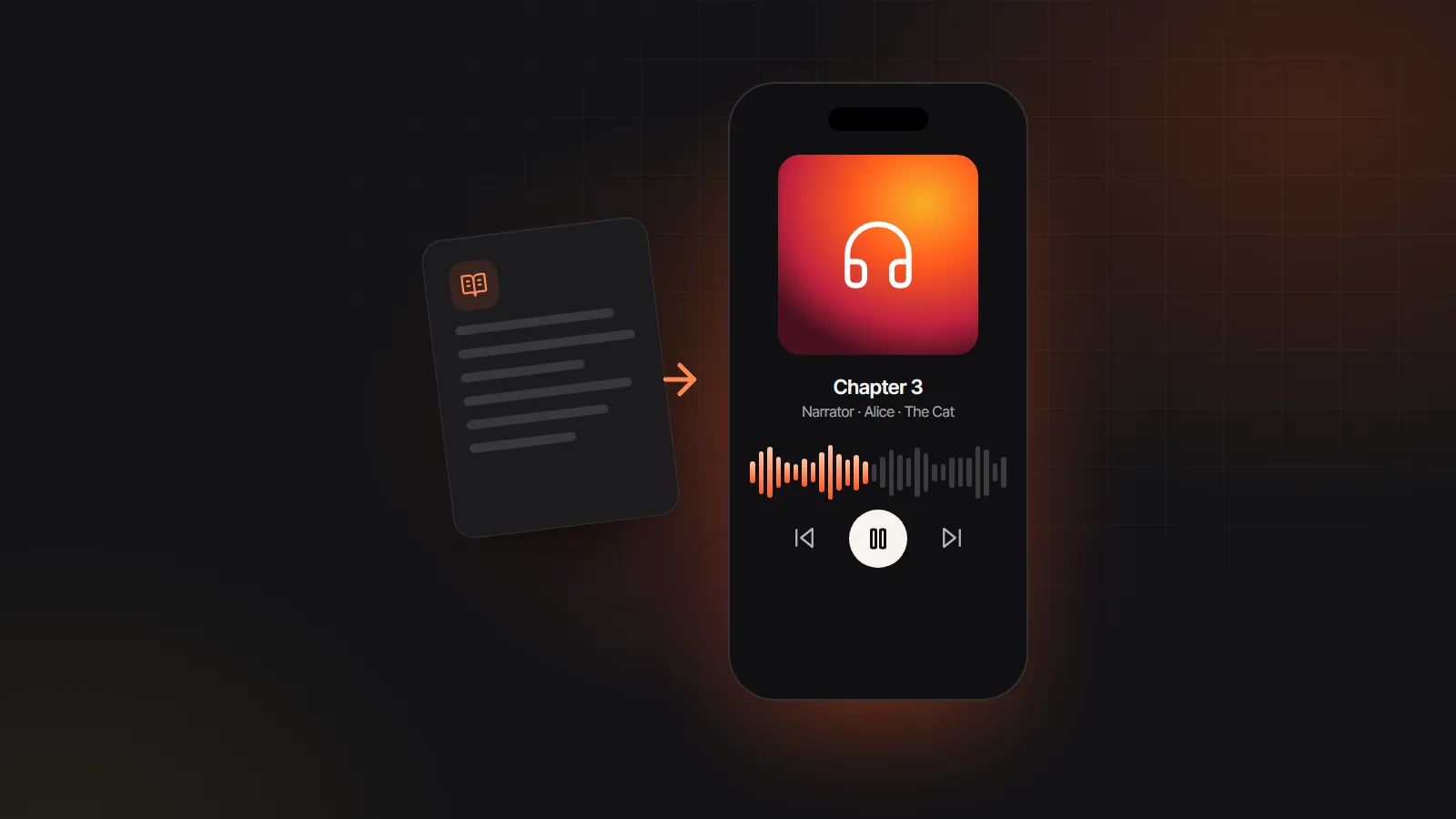
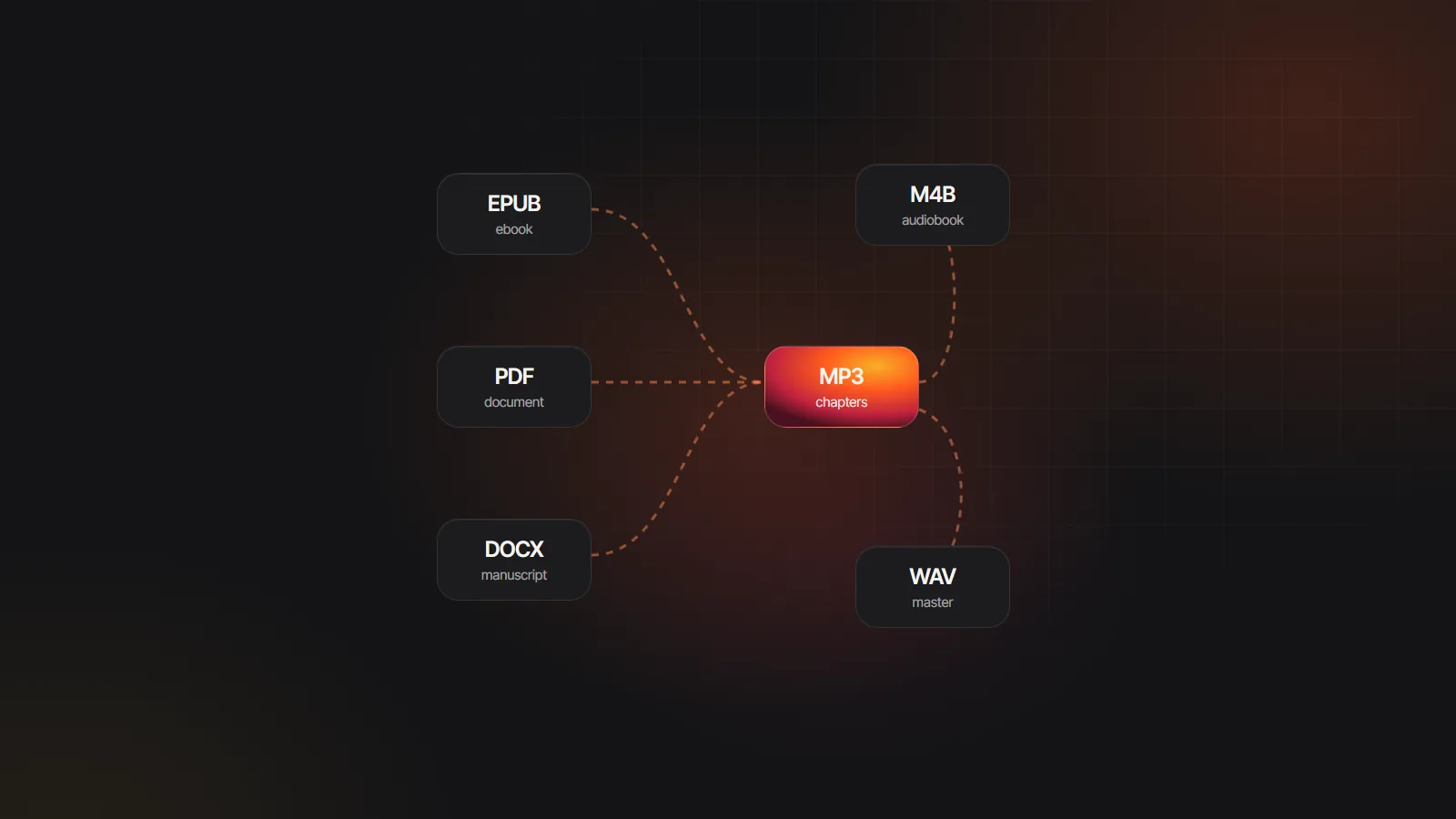
For a classic with no recording you enjoy, or a DRM-free book you wrote yourself, you can produce your own edition. The public domain audiobooks page shows the workflow, with a narrator plus a separate voice for each character, and the AI audiobook generator exports M4B or MP3 files that play in compatible audiobook apps and stay yours, whichever plans you keep.